ATTENTION!
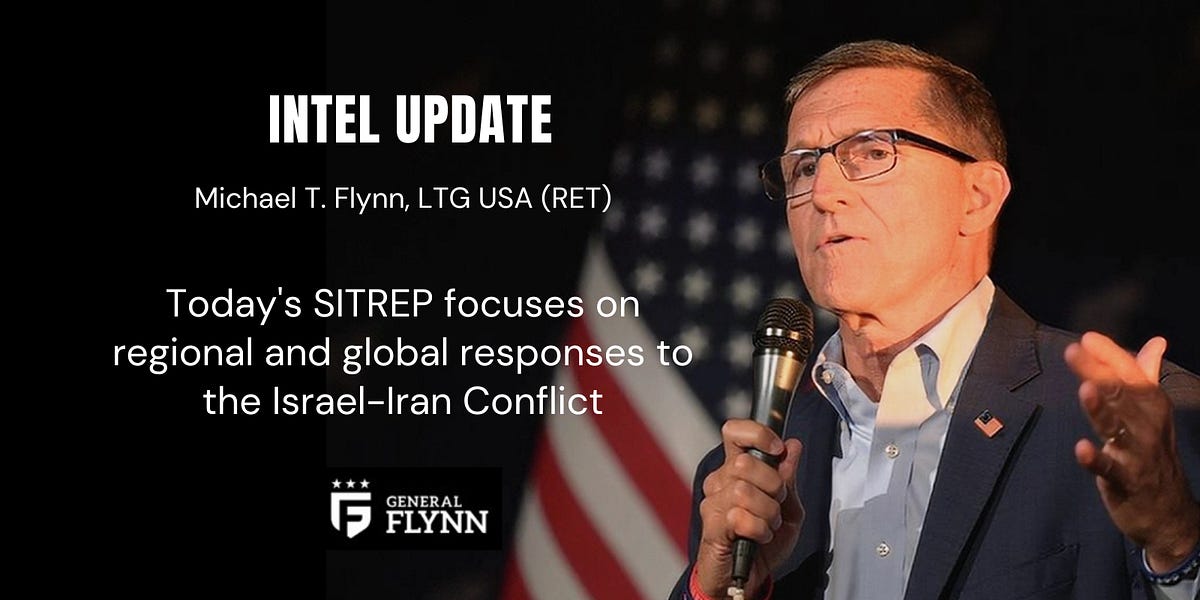
Today's SITREP focuses on regional and global responses (thread 1 of 2).
The ongoing conflict between Iran & Israel involves direct military strikes, with both sides exchanging missile & drone attacks, causing significant casualties.
Regional responses include support from groups like the Houthis in Yemen, while Hezbollah & Gaza have limited involvement.
Globally, the U.S. & UK have taken military precautions, & countries like Russia & China focus on diplomacy, with calls for de-escalation from the EU & UN. The situation is complex, with ongoing diplomatic efforts & concerns about regional stability, & opinions vary on responsibility & escalation.
The war between Iran & Israel has seen intense military engagements, with both nations launching strikes against each other. This conflict has drawn varied responses from regional actors & global powers, reflecting a mix of military, diplomatic, & humanitarian concerns.
Israel has targeted Iranian military & nuclear sites, while Iran has retaliated with missile & drone attacks, leading to casualties on both sides. Regional groups like the Houthis in Yemen have supported Iran w/ missile launches, & there have been minor actions from Gaza, though Hezbollah has not actively joined the fray.
Globally, The U.S. has stated it was not involved in Israel's strikes but has warned Iran against attacking U.S. assets, with the UK deploying additional jets to the region. Russia & China have engaged in diplomatic efforts, while the EU, France, Germany, & others call for de-escalation. The UN condemned the escalation, urging restraint & holding emergency meetings.
The conflict's complexity is evident, w/ diplomatic talks like those mediated by Oman being canceled, & concerns about nuclear safety & regional stability persist. The INTL community remains divided, w/ varying views on responsibility & the path forward.
Regional & Global Military Responses to the IR-IS Conflict vary & the ongoing conflict has caused an array of regional/global military responses, reflecting the geopolitical stakes & the potential for broader escalation.
The conflict has clearly intensified with Israel launching its initial airstrikes back on 13 June. Targets in Iran include military & nuclear facilities, such as Natanz, Esfahan Nuclear Technology Center, Tabriz Airbase, Hamedan Airbase, Amand Missile Base, Bakhtaran missile base, & energy infrastructure such as South Pars, Fajr-e Jam, and Shahran oil depot, as well as the Farda Motors factor. Israel described these actions as aimed at dismantling Iran's nuclear program and ballistic missile capabilities, reporting a 90% interception rate of Iranian munitions. Iran responded with Operation True Promise III, launching 7 waves of ballistic missile attacks & two waves of drones, causing significant casualties, w/ at least 13 deaths & 270 wounded in Israel.
The regional landscape shows a mix of direct involvement & limited engagement. For instance, Israel's military, the IDF, has been proactive, striking 80 targets in Iran, including oil depots and the defense ministry, as part of its campaign to neutralize Iran's nuclear and ballistic missile threats.
Iran's retaliation has been robust, w/ missile barrages targeting Israeli cities like Haifa & Tel Aviv, causing residential areas to take direct hits. My assessment at this stage is that the ability for Iran to sustain these type strikes is limited.
The Houthis, aligned w/ Iran, have launched three drones & one ballistic missile at Israel, coordinating with Iran's efforts, though Israeli officials were unaware of some attacks from Yemen.
Hezbollah has not participated actively, limiting its response to generic condemnation statements, indicating a cautious approach to avoid direct involvement (at this stage they likely know better).
Two rockets were launched from Gaza, falling near Nir Oz, with no group claiming responsibility, suggesting limited and uncoordinated action (likely loner thugs).
Click on the link to continue reading.
https://open.substack.com/pub/genflynn/p/todays-sitrep-focuses-on-regional?r=24s8km&utm_campaign=post&utm_medium=web&showWelcomeOnShare=true