SITREP: IRAN CONFLICT | Day 35
REGIONAL SPILLOVER:
This war has not stayed in the Middle East. Iran made sure of that on day one.
The Strait of Hormuz is blocked. That single chokepoint carries roughly 20 percent of the world's oil and liquefied natural gas. With it closed, prices have increased to over $100 a barrel. Kuwait's international airport has been shut since February 28. Iranian drones and missiles have struck the Mina al-Ahmadi oil refinery, desalinization plants, and port infrastructure across Bahrain and Saudi Arabia.
HOMELAND THREATS: WHAT EVERY AMERICAN SHOULD KNOW
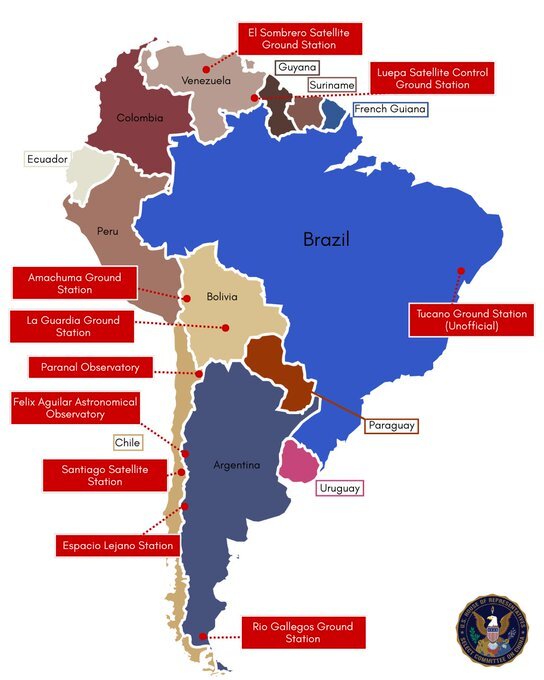
The threat does not stop at our water's edge any longer. Iran has spent decades building infrastructure inside this hemisphere precisely for moments like this. Americans need to understand what that means practically.
PHYSICAL THREAT:
The day Operation Epic Fury launched, a gunman walked into a bar in Austin, Texas and killed three Americans. He was wearing an Iranian flag on his shirt. Federal investigators are actively treating the conflict as the primary motive. That case is open. It is not the only concern.
Iran's IRGC and Ministry of Intelligence have active personnel networks operating in Mexico, Canada, Central America, and South America. These are not hypothetical sleeper cells pulled from a thriller novel. They are documented, they have operated in coordination with Mexican cartels before, and those same cartels are already using weaponized drones to conduct assassinations. The combination of Iranian operational intent and cartel drone capability in our own hemisphere is something federal law enforcement is watching in real time.
CYBER THREAT:
Iran-aligned hackers have already hit Stryker, one of the largest medical technology companies in the United States, disrupting operations across its network. An IRGC-linked group called Hydro Kitten has announced its intent to target the U.S. financial sector. CISA, the FBI, and the NSA have all issued formal warnings to critical infrastructure operators, including those covering water systems, energy grids, and communications networks.
On the consumer side, threat analysts have tracked over 7,300 active phishing campaigns exploiting this conflict, impersonating your phone carrier, your airline, and your bank. They are designed to steal your credentials and compromise your accounts. It is an active campaign targeting ordinary Americans.
Do not click on unsolicited links.
Verify anything that arrives unexpectedly in your inbox or on your phone before you trust it.
DIPLOMACY: IS THERE AN OFF-RAMP?
Pakistan is attempting to broker talks. Messages have been exchanged between Washington and Tehran through back-channels, including U.S. Special Envoy Steve Witkoff. President Trump has said the war could end within two to three weeks and that a formal deal is not a prerequisite for the U.S. to stand down.
Whether that holds depends entirely on what Iran does next and whether the coming escalation against power plants and energy infrastructure breaks their will to continue or hardens it.
Both paths remain open. Neither is guaranteed.
BOTTOM LINE:
The homeland threat is real, assessed, and active. The primary vector is cyber, targeting infrastructure, institutions, and individual Americans. The secondary threat is physical, operating through proxy networks and pre-positioned assets currently in this hemisphere.
Stay informed and keep the brave men and women fighting for this nation in your prayers. And pray for President Donald J. Trump as he carries the weight of these decisions at one of the most consequential moments in modern American history.
The next two to three weeks will be decisive.